The tower incident
The tower incident is the catastrophic climax of E. T. A. Hoffmann's 'The Sandman', the moment when Nathaniel's fragile recovery shatters, his repressed trauma erupts into lethal violence, and the story's entwined motifs of eyes, automatons, and the uncanny converge in a single, irreversible act. It is the event that finally resolves the narrative's central ambiguity—whether the dark forces Nathaniel fears are external or internal—by delivering a death that is at once self-inflicted and triggered by the reappearance of Coppelius, the figure who has haunted him since childhood.
Background and the Illusion of Recovery
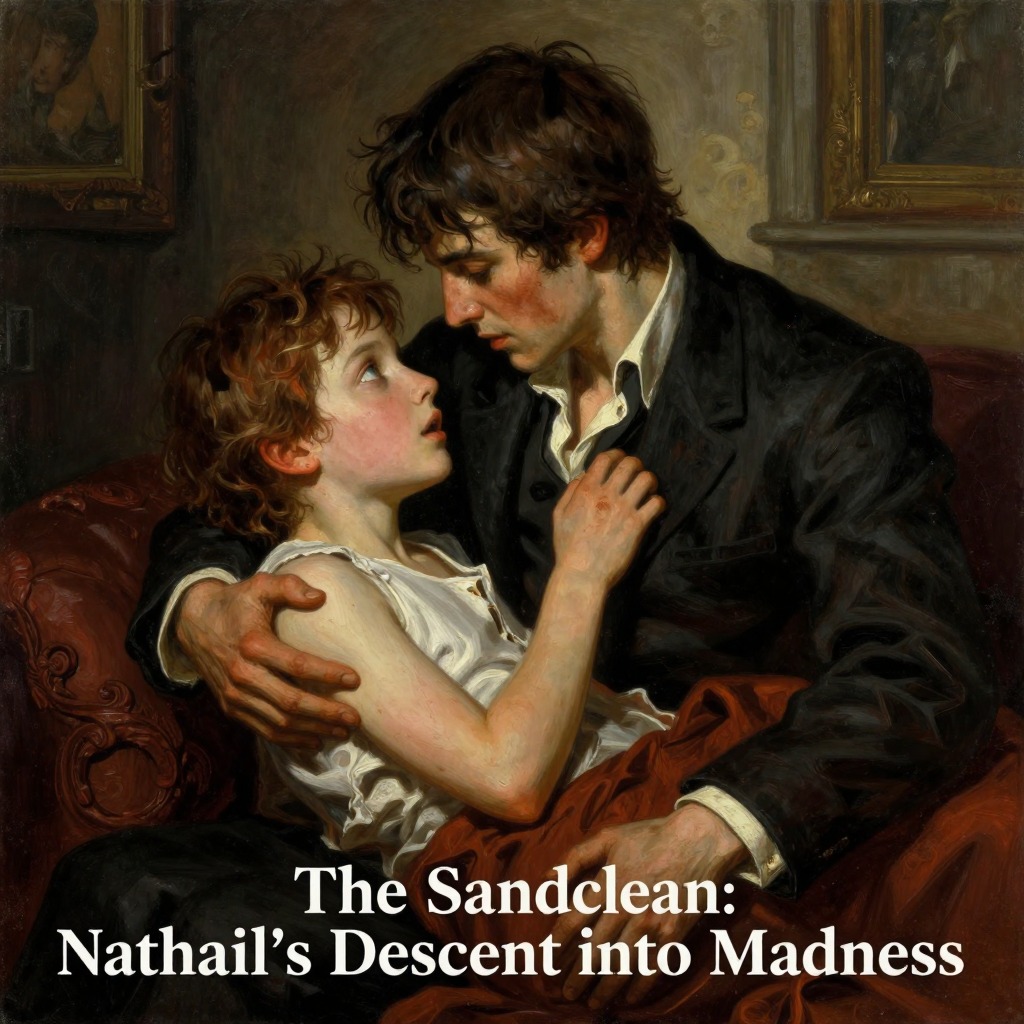
In the weeks following the revelation that Olympia was a lifeless automaton and Nathaniel's subsequent descent into raving madness, he was taken to a madhouse. When he finally awakened, he found himself in his father's house, with Clara, his mother, and Lothar at his bedside. Clara embraced him and declared, 'At last, at last, oh my dearly beloved Nathaniel, you've pulled through at last, and now you're mine again!' Every last trace of madness seemed gone. Under the painstaking care of his mother, his beloved, and his friends, Nathaniel grew more gentle and childlike than ever, and only now truly recognized Clara's 'heavenly pure, radiant spirit'. A fortunate inheritance—a considerable fortune and a small country estate from a miserly uncle—had also arrived, and the four planned to move there together. No one breathed a single hint of the recent past. The future appeared secure: Nathaniel and Clara were to marry, and the family would begin a new life far from the city.
The Ascent and the Trigger
On the day of the move, the four happy people went walking through the city streets to buy some things. As the tall town hall tower cast a long shadow over the market square, Clara suggested they climb it one last time to gaze out at the distant mountains. Nathaniel and Clara ascended together; Lothar, disinclined to mount the many steps, stayed below, while the mother went home with the maid. At the highest lookout gallery, the two lovers stood arm in arm, peering at the sweet-scented ring of woods and the blue mountains beyond. Clara pointed to a strange little grey bush that seemed to be slowly drawing near. Nathaniel, in a mechanical gesture, reached into his coat pocket and found Coppola's looking-glass—the same finely crafted pocket telescope through which he had first seen Olympia's face come alive. He turned it sideways. There was Clara standing in the eye of the lens.
The Attack and the Rescue
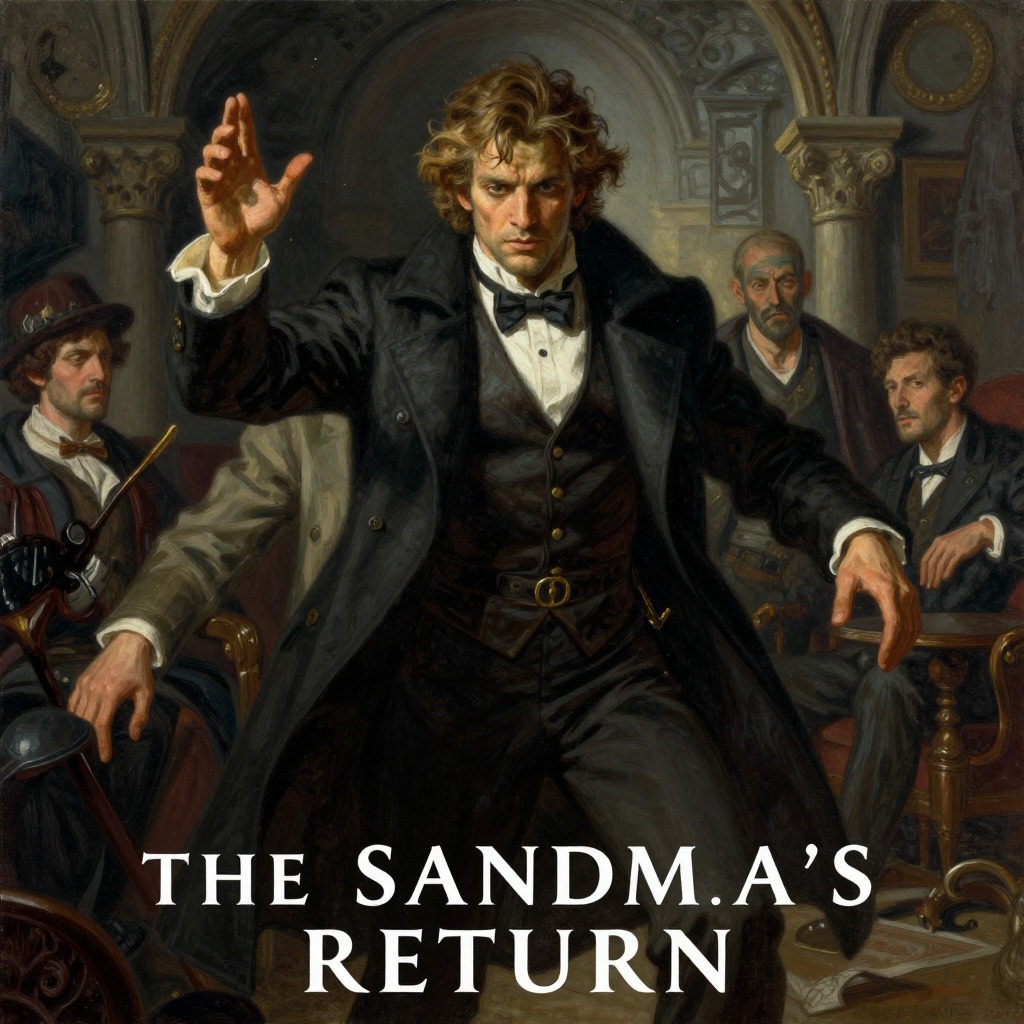
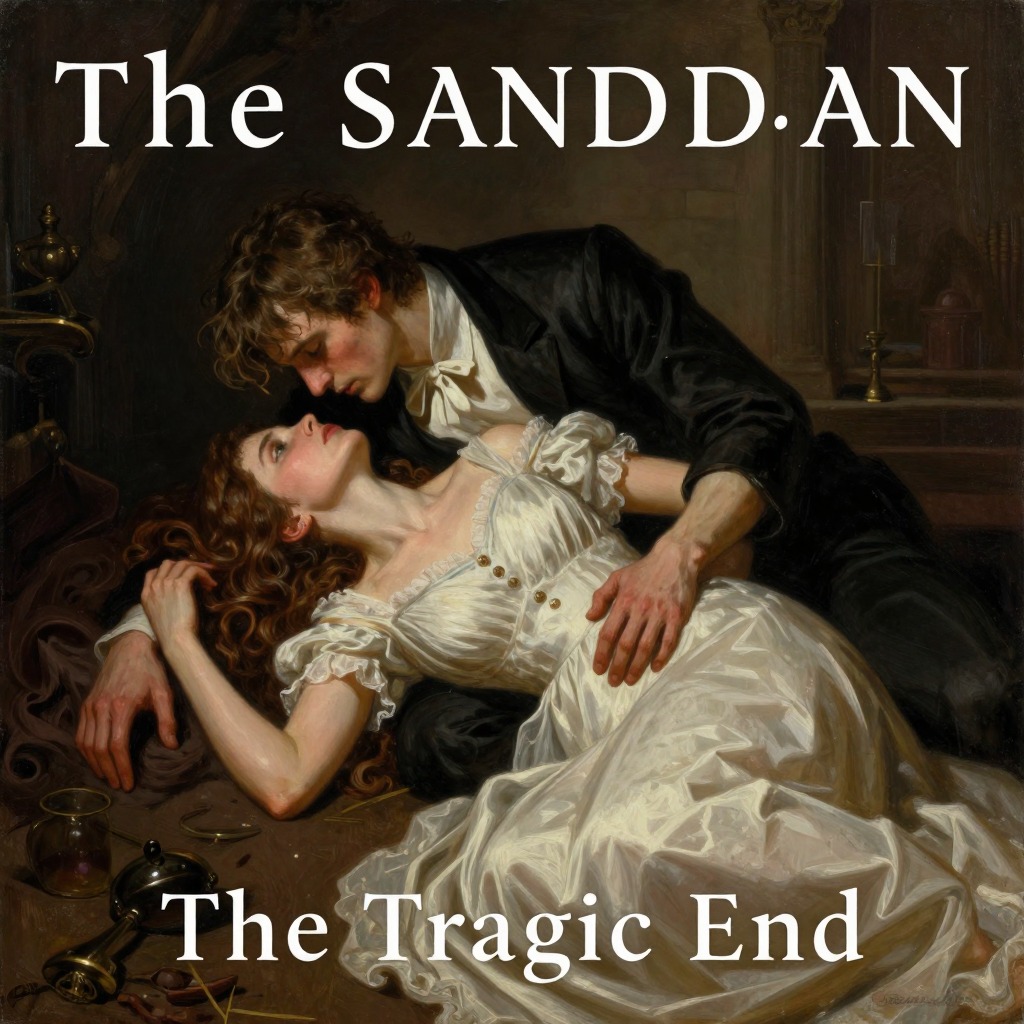
The effect was instantaneous and devastating. A spasmodic quiver started up in Nathaniel's veins and arteries; he turned deathly pale, and sparks of fire flashed from his rolling eyes. He let out a horrible cry like a hunted animal, jumped high in the air, and with a curious cackle screamed out shrilly: 'Turn, little wooden doll, turn!' With a great burst of strength, he grabbed hold of Clara and tried to hurl her off the balcony. Clara clung for dear life to the metal railing. Hearing the madman's raving and Clara's terrified screams, Lothar, gripped by a terrible foreboding, clambered up the stairs, only to find the door to the second flight locked. Clara's piteous screams grew louder and louder. Consumed with anger and fear, Lothar hurled himself against the door until it gave way. Clara's cries grew fainter—'Help! Save me! Save me!'—until her voice went silent. Lothar screamed that she was done for, murdered by that madman. The door to the lookout gallery was also locked. Desperation turned him into a lion; he broke it down. Clara dangled in Nathaniel's mad grip over the edge of the railing, holding on to the cast-iron railing by only one hand. Quick as lightning, Lothar grabbed his sister, pulled her to safety, and at the same moment heaved a balled fist into the madman's face, sending him tumbling backwards. Clara was saved.
The Suicide and Coppelius's Final Appearance
While Lothar raced back down the steps with his unconscious sister in his arms, Nathaniel kept flailing about on the lookout gallery, jumping high in the air and crying, 'Ring of fire, turn! Ring of fire, turn!'—the same words he had screamed during his first madness. A throng gathered below, aroused by the screams. Among them was the lawyer Coppelius, who had just come to town and made straight for the market square. When some people wanted to climb the tower to capture the madman, Coppelius laughed and said, 'Ha ha, just be patient, he'll be down shortly on his own initiative!' Nathaniel suddenly stopped dead in his tracks. He leant down, spotted Coppelius below, and with a shrill shriek—'Ha! Eyes a pretty! Eyes a pretty!'—he leapt over the parapet. As he landed, his skull smashed on the cobblestones. Coppelius disappeared into the crowd.
Aftermath and Clara's Fate
Some years later, Clara was said to have been spotted in a distant town, seated hand in hand with a friendly man on a bench before the door of a lovely little country house, two bouncing boys playing at her feet. The narrator suggests that she finally found the quiet domestic bliss that suited her cheerful, life-loving spirit—a happiness that Nathaniel, in his torn and troubled state, could never have given her. The tower incident thus completes the story's arc: the rational, life-affirming Clara survives and prospers, while Nathaniel, unable to escape the dark force that has possessed him since childhood, is destroyed by the very instrument—the looking-glass—that first seduced him into the delusion of Olympia's love.